
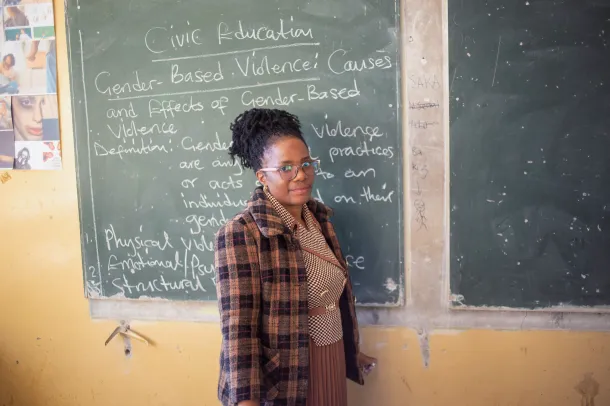
After more than two decades in the classroom, Diana Lomunthunzi Soko, a Civic Education teacher at Linda Secondary School in Livingstone, Zambia believed she understood what it meant to be a good teacher. But training through UNESCO's Our Rights, Our Lives, Our Future (O3) Programme reshaped her understanding of education.
Today, teaching is no longer only about preparing learners for examinations. It is about preparing them for life.
Early and unintended pregnancies, child marriages, substance abuse and gender-based violence are some of the challenges young people continue to face after they leave the classroom – and also sometimes even within schools.
In response, across East and Southern Africa, teachers are creatively integrating Life Skills and Health Education (LSHE) into subjects they already teach, transforming classrooms into spaces where learners can ask difficult questions, challenge harmful norms and build the confidence to make informed decisions. Whether through debates in Civic Education, role plays in Biology or unexpected connections in Chemistry, teachers are bringing lessons to life in ways that make learning relevant far beyond the classroom —equipping young people with the knowledge and skills to navigate real-life challenges while in school.
From hesitation to confidence
When LSHE was first introduced in Zambia—then known as Comprehensive Sexuality Education (CSE)—many teachers were uncertain about discussing sensitive topics. Some parents also misunderstood the programme, believing the content was inappropriate for learners.
"I was hesitant to discuss sensitive topics," Soko recalls. "I worried that I might give learners inappropriate information."
The training changed everything.
"I realised that knowledge is power. If we don't talk about these issues, young people continue facing challenges like teenage pregnancy, substance abuse and dropping out of school without the information they need."
Today, Soko seamlessly integrates LSHE into her Civic Education lessons by identifying where topics overlap. Using learner-centred discussions, debates, poems, dances and problem-solving activities, she dives deep into issues such as gender-based violence, while encouraging students to identify prevention and response mechanisms.
"When learners are actively involved, they become excited because they can relate what they learn in class to real-life experiences," she says.
Teaching science that prepares learners for life
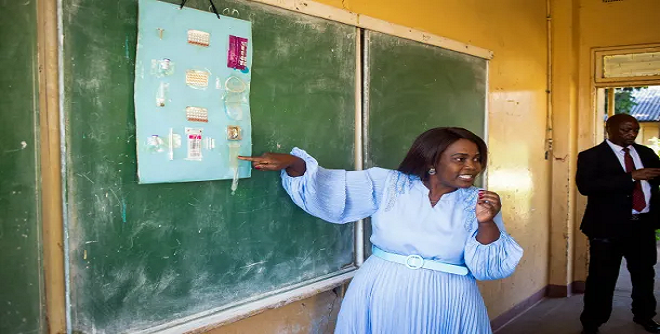
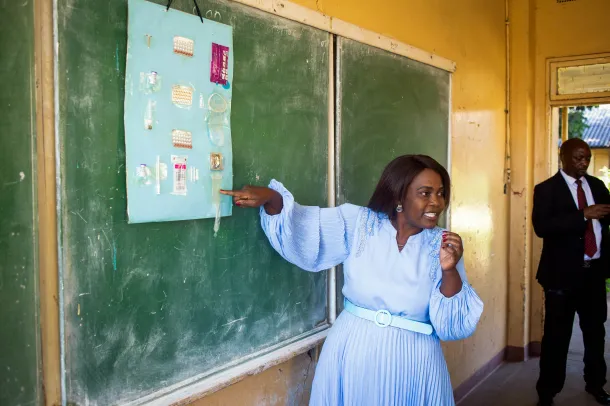
Just down the corridor, Biology teacher Bernadette Makayi is taking a similarly creative approach.
When teaching topics such as human reproduction, she goes beyond scientific facts. Through storytelling, role plays, group discussions and scenario-based learning, she connects Biology to everyday decisions about health, relationships and personal responsibility.
"A learner may pass examinations with good grades," she says, "but still struggle in life if they lack decision-making skills."
Because the lessons reflect situations learners encounter every day, they become active participants rather than passive listeners.
"The topics relate to real life," Makayi explains. "Learners share ideas, discuss experiences and learn from one another."
Hundreds of kilometres away, another teacher is demonstrating that creativity can transform even the most technical subjects.
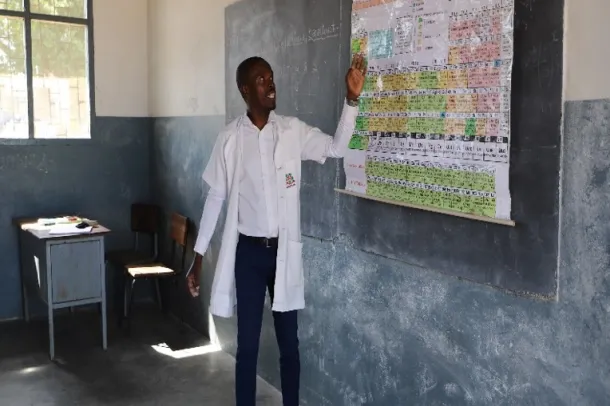
At Meconta Sede Secondary School in Nampula Province, Mozambique, Grade 11 Chemistry teacher Guilherme António Amisse uses a lesson on the periodic table to start conversations about menstrual health.
By drawing parallels between the periodic table and the menstrual calendar, he helps students understand both scientific concepts and menstrual health while challenging long-standing taboos around discussing menstruation openly.
The lesson also creates opportunities to discuss preventing early pregnancies, and reporting school-related gender-based violence, bullying and discrimination.
Rather than treating Life Skills and Health Education as a separate subject, Amisse uses Chemistry as a gateway to conversations that help learners protect their health and well-being.
"These lessons are so important for growing young learners, as they shape their futures," he says.
Classrooms built on trust
These creative teaching approaches have done more than make lessons engaging—they have built trust.
For Makayi, one of the greatest changes has been seeing learners feel comfortable enough to seek help.
"Many learners now come to me with concerns they cannot discuss with their parents or guardians."
She recalls one learner who disclosed attempted sexual abuse by a family member after feeling safe enough to approach her.
Together, they worked to find a safer environment.
She says, "that experience reminded me that teachers are often the first trusted adults young people turn to."
Soko has witnessed similar transformations.
She remembers a learner who became pregnant while in Grade 10. After participating in LSHE lessons, the learner began asking questions, seeking guidance and reflecting on the choices she had made. "She told me that if she had received this information earlier, she might have made different decisions."
Today, the young woman is more confident, more assertive and more willing to seek support.
Soko has also seen learners become more vocal about issues such as substance abuse, even reporting concerns about friends who may need help.
"That shows responsibility," she says. "It shows they care about each other."
Lessons that shape futures
The impact is equally visible through the learners themselves.
Nineteen-year-old Prince Miyanda, Vice Head Boy at Linda Secondary School, says the lessons have helped him better understand STI prevention, relationships, peer pressure and how to make informed decisions.
More importantly, he says the lessons have given him confidence to ask questions without feeling embarrassed.
For Head Girl Joyce Sikalubya, the lessons have strengthened both her leadership and her ambitions.
She dreams of becoming a chemical engineer, challenging expectations that girls should pursue only traditional careers.
"The lessons help us understand our bodies, our rights and how to protect ourselves....they also help me guide other girls and encourage them to make decisions that protect their education and their future."
Joyce Sikalubya, Head Girl of the Linda Secondary School in Livingstone, Zambia
More than teachers
Across East and Southern Africa, teachers are redefining what it means to educate. They are finding creative ways to integrate Life Skills and Health Education into the subjects they already teach, making lessons more engaging, practical and meaningful.
They are transforming classrooms into safe spaces where learners can ask difficult questions without fear of judgement.
They are helping young people challenge harmful social norms, build healthy relationships, resist peer pressure and seek help when they need it.
And in doing so, they are proving that some of the most important lessons taught in school are not those that appear on an examination paper.
Celebrating the teachers who change lives
On World Teachers' Day, UNESCO celebrates educators who do far more than prepare learners for examinations.
They turn Civic Education into conversations about gender-based violence, responsibility and resilience.
They transform Biology and Chemistry into opportunities to discuss menstrual health, dignity and informed decision-making.
They create classrooms where curiosity is welcomed, difficult conversations are encouraged and every learner feels seen and supported.
Above all, they remind us that education is not only about academic achievement—it is about equipping young people with the knowledge, skills and confidence to navigate life.
Because sometimes, the greatest lesson a teacher gives is not one found in a textbook. It is the belief that every young person has the power to shape their own future.
UNESCO
