
By Ayo Ajayi
Diabetes is increasingly becoming a major public health concern across the world, and Nigeria is not exempt from this growing challenge. While the condition is often associated with adults and older people, children, teenagers and young adults can also develop diabetes.
Unfortunately, a lack of awareness, misconceptions about the disease and delayed medical attention can make its consequences particularly devastating for younger people.
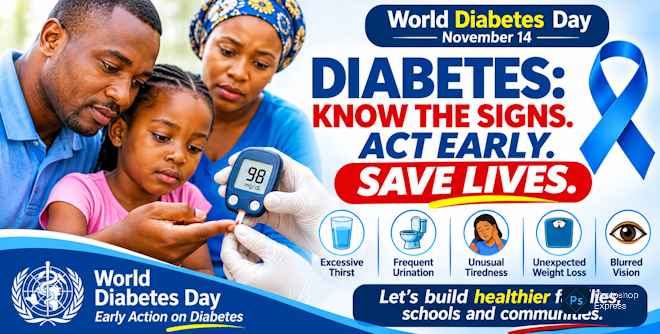
The 2026 World Diabetes Day, observed on November 14, provides an important opportunity to draw attention to this challenge. The World Health Organization (WHO) and the International Diabetes Federation (IDF) have adopted “Early Action on Diabetes” as the theme for the 2026–2027 campaign. The focus is on early diagnosis, reducing the risk of Type 2 diabetes, improving access to quality healthcare and ensuring that people living with diabetes receive appropriate support.
The message is particularly relevant to Nigerian families, where recognising symptoms early could prevent avoidable medical emergencies.
Diabetes mellitus is a chronic condition that occurs when the body cannot properly regulate the level of glucose, commonly known as blood sugar, in the bloodstream.
Glucose is an important source of energy for the body, while insulin, a hormone produced by the pancreas, helps glucose move from the blood into the body's cells for energy.
When the body does not produce enough insulin or cannot use it effectively, glucose accumulates in the bloodstream. If left untreated or poorly controlled over time, this can damage vital organs, including the heart, kidneys and eyes, as well as the nerves and blood vessels.
One common misconception is that diabetes is simply a disease caused by eating too much sugar. Although excessive consumption of sugary foods and drinks can contribute to unhealthy weight gain and increase the risk of Type 2 diabetes, the disease has more complex causes. Genetic, biological, environmental and lifestyle factors all play different roles, depending on the type of diabetes.
A critical fact parents must understand is that Type 1 diabetes is not caused by eating too much sugar, poor parenting or a lack of physical exercise. Neither can it currently be prevented through lifestyle changes. People living with Type 1 diabetes require lifelong insulin treatment to survive and maintain appropriate blood glucose levels.
Type 2 diabetes, on the other hand, occurs when the body becomes resistant to insulin or cannot produce enough insulin to maintain normal blood glucose levels. Although traditionally associated with adults, it is increasingly being identified among children and adolescents. Excess body weight, physical inactivity, unhealthy diets, family history and other metabolic factors can contribute to its development.
Unlike Type 1 diabetes, Type 2 diabetes can often be prevented or delayed through appropriate lifestyle changes, particularly among people who are at increased risk.
Beyond the number of diagnosed cases, the wider African region faces a serious challenge of undiagnosed diabetes. The IDF estimates that approximately 73 per cent of adults living with diabetes in the region are unaware that they have the condition. This means that many people may be living with elevated blood glucose without knowing they need medical attention.
Although these figures relate to adults and should not be interpreted as the number of Nigerian children living with diabetes, they demonstrate the scale of the country's wider diabetes challenge. They also reinforce the importance of educating families before preventable risk factors and undetected symptoms develop into more serious health problems.
For Type 1 diabetes, symptoms can develop rapidly over days or weeks. In some cases, the condition may progress to diabetic ketoacidosis (DKA), a life-threatening complication that occurs when the body produces excessive ketones because it cannot use glucose properly.
Warning signs of DKA include nausea, vomiting, abdominal pain, deep or rapid breathing, fruity-smelling breath, severe dehydration and unusual drowsiness or confusion. These symptoms require immediate emergency medical attention.
Type 2 diabetes can be more difficult to identify because symptoms may develop gradually and sometimes remain unnoticed for years. This makes medical assessment and appropriate blood glucose testing important, particularly for young people with recognised risk factors.
More importantly, children already living with diabetes should not be discriminated against, isolated or ridiculed because of their condition. They need understanding, appropriate medical support and an enabling learning environment.
Teachers and school administrators should understand that a student living with diabetes may need access to prescribed medication, blood glucose monitoring, food at appropriate times and assistance during episodes of low blood sugar. Such arrangements should be guided by the child's healthcare team and made in consultation with parents.
Diabetes should never become a reason to deny a child the opportunity to participate meaningfully in school activities or pursue academic ambitions.
Parents should not wait for a child to become seriously ill before seeking medical advice. Where symptoms are present, prompt assessment is necessary.
For young people with a family history of Type 2 diabetes or other recognised risk factors, parents can also discuss appropriate screening with healthcare professionals.
For those already diagnosed, consistent treatment and follow-up are essential. People with Type 1 diabetes need insulin, while treatment for Type 2 diabetes may involve lifestyle adjustments, medication or insulin, depending on the patient's condition.
The WHO has also emphasised that access to affordable insulin, essential medicines, blood glucose monitoring and quality healthcare must remain central to diabetes control. Early diagnosis is only meaningful when it is followed by appropriate and uninterrupted treatment.
Another issue that deserves attention is the stigma associated with diabetes. Some people wrongly assume that everyone living with the condition must have unhealthy eating habits or that the disease is necessarily a consequence of personal negligence.
Such assumptions can discourage people from discussing their symptoms, seeking medical assistance or sharing their experiences.
For children and adolescents, the consequences can be particularly damaging. Being labelled, bullied or excluded because of a medical condition can affect their confidence, emotional well-being and willingness to participate in school and social activities.
Families, teachers, friends and communities must therefore replace judgement with understanding. A child living with diabetes deserves encouragement, dignity and the same opportunities as every other child.
The WHO's 2026 campaign specifically identifies the need to challenge diabetes stigma and promote supportive environments for people living with the condition.
The challenge also requires greater collaboration among parents, healthcare professionals, educators, civil society organisations and policymakers. Diabetes prevention and management should not be treated as the responsibility of individuals alone. Communities must help create environments where healthy choices are accessible and quality healthcare is within reach.
Ultimately, diabetes does not have to mean the end of a child's dreams, a young person's ambitions or an individual's ability to live a fulfilling life. With timely diagnosis, appropriate treatment, continuous support and informed lifestyle choices, people living with diabetes can pursue their aspirations and contribute meaningfully to society.
The lesson of World Diabetes Day 2026 is clear: do not wait for diabetes to become an emergency before taking action. Know the symptoms, recognise the risks, seek medical advice early and support those living with the condition. Early action can save lives.
Authoritative sources
WHO – World Diabetes Day 2026: Early Action on Diabetes.
WHO – Diabetes Fact Sheet, November 11, 2026.
WHO – Diabetes: Questions and Answers.
International Diabetes Federation – Diabetes Atlas, 11th Edition, 2025.
IDF – World Diabetes Day 2026–2027 Campaign.

Leave a Reply