
By Abdulrasheed Akere
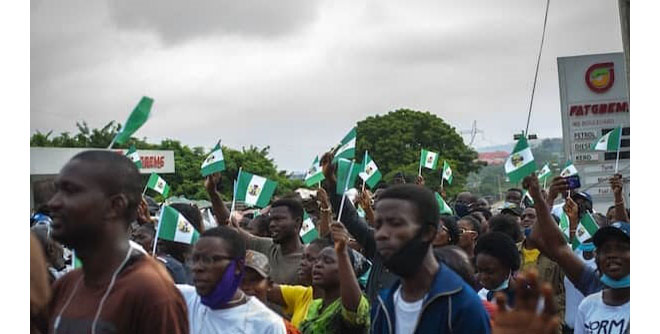
Nigeria gained Independence from the British colonial masters on the 1st of October, 1960, regardless of the about 63 years of her freedom, it still remains a developing west African country. Even some African countries that became independent not too long ago seem to be standard nations on their own, whereas the known giant of Africa is battling with several challenges that make its growth and development deteriorate. Her citizens now find it difficult to distinguish between Nigeria before Independence and after Independence. Frankly, this is neither the Nigeria we want nor the Independence that our past nationalistic legends fought for.
Although we pray in our national anthem that the labour of our heroes' past shall never be in vain, the fruits we reap today are not tantamount to the expected outcome of what our ancestors sowed. It is crucial to spell out certain paramount parameters that need to appear in our nation's polity so as to have the Nigeria that we crave. Firstly, we want a good leader that will pilot the affairs of this country to a greater height. Leaders of nowadays Nigeria are viding Machiavellianism instead of practising nationalism and patriotism. They listen not to the agonies of people talk-less of providing an everlasting solution to them.
For instance, during the 2022 ASUU strike where almost everyone called out to the government for help but they failed to respond on time. We want a leader that will react to our ordeals, and look after our welfare, not one that will use their policy to disrupt our plans and incept problems to our well-being as in that of banning 200, 500 and 1000 Naira notes.
Also, we want a Nigeria with a stable economy, the cost of living is too high which makes everyone suffer hardship. Goods and services are now unaffordable, this should be curtailed to make life easier for young and elderly ones. History has it that Umaru Musa Yar’adua is the best Nigerian president ever due to the saintly atmosphere of the country during his 2007 to 2010 presidency. In his administration, he decreased petroleum prices, rice was cheap, and other entities were also affordable, unlike today's Nigeria Premium Motor Spirit (PMS), Diesel, Kerosene, and cooking gas are expensive and scarce. Likewise, foodstuffs such as rice, beans, yam, corn, etcetera that Nigeria even produces by itself are also costly and unaffordable.
Additionally, we want a country that will value and prioritize education. Perhaps we are fond of saying education is the best legacy but, we lack the opportunity to pursue it. Late Professor A. A Wasagu of Usmanu Danfodiyo University Sokoto once said that “No nation will develop above its level of education.” This is true because adequate education has the potency to instil God-fearing, bevvy skills and philosophical reasoning in people which will enhance the prosperity of their society. The effect of education will also keep the country safe and secure for dwellers who would be acquainted with the sequence, essence and consequence of their doings. Take for instance, the case of the Boko Haram insurgent group in the northeastern part of Nigeria, if its members are well educated and have knowledge of humanity, they will not be recruited to kill and maim their fellow human beings.
Moreso, Nigeria we want is a secure, safe and peaceful nation, not the one where citizens' blood is used to taint their fathers’ land. Insecurity is now rampant in our domiciliary, even statisticians could not convey accurate statistics of lives and properties that we had lost to rebellions. Almost every Nigeria's six geo-political zones (North-east, North-west, North-central, South-east South-west, South-south) are battling with terrorist groups such as Boko Haram, IPOB, Bandits, Fulani herders, unknown gunmen and so on. Millions of Nigerians have been displaced as a result of their attacks, and figures of Internally Displaced People (IDP) increase incessantly while some of our citizens become refugees in other countries.
Sympathetically, some landlords become homeless, children become orphans, wives become widows, and givers become beggars due to the insurgency. Times without numbers, some state governments declared a state of emergency in their territories as in Sokoto state 2021 curfew policy, for how long are we going to experience this issue? This is not the Nigeria we want.
Furthermore, universities, polytechnics and colleges produce a myriad of graduates almost every year, whereas there's little or no vacancy for employment opportunities. Citizens are jobless and facing financial challenges in their day-to-day life, this has caused more harm to our dear country. Recall an adage that says ‘an idle man is a devil man's workshop’, the enormous number of unemployed graduates are found engaged in illegitimate acts in the course of survival. We want a Nigeria where people will be provided with a high-paying jobs that will help them to live a substantial life.
Historically, former president Olusegun Obasanjo established two anti-graft agencies, Independent Corrupt Practice Commission, ICPC and Economic Financial Crime Commission, or EFCC in the year 2000 and 2002 respectively in order to combat corruption. Notwithstanding, crime and illicit practices still thrive within both government and civilian individuals. Corrupted people have diverged the maximum of what belongs to everyone into their personal assets, which is bad and unfair. We wish to have a fortunate nation ruled by uncorrupted honchos.
Conclusively, Nigeria has its motto —unity and faith, peace and progress in words not in practice. Despite the 1906 amalgamation and 1914 largest amalgamation of southern and northern provinces, some regions still find it difficult to unite with each other. The white colour in the national flag symbolizes peace yet Nigeria ranked 148 Very Low Peace (VLP) out of 163 countries in the Global Peace Index. In short, we want all the atrocities to go extinct in order to have a better Nigeria even if it's not a new one.
About the writer: Abdulrasheed Akere, a penultimate student of Usmanu Danfodiyo University Sokoto (UDUS).
