
By Ayo Ajayi
A school should be a place where children develop their abilities, teachers nurture knowledge and families find hope for a better future. But when violence, abductions and threats become part of the reality surrounding educational institutions, the purpose of schooling is undermined. For Nigeria, the challenge is no longer simply how to respond when a school is attacked, but how to build a system that prevents such incidents and protects the right of every child to learn without fear.
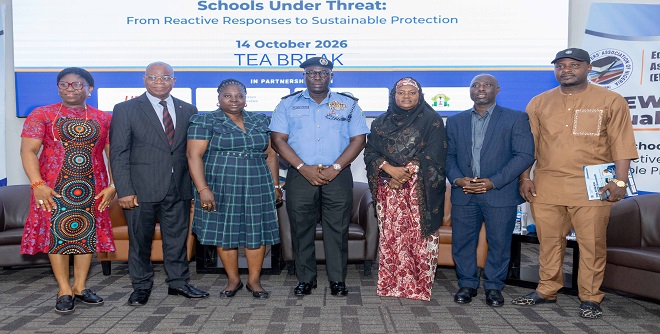
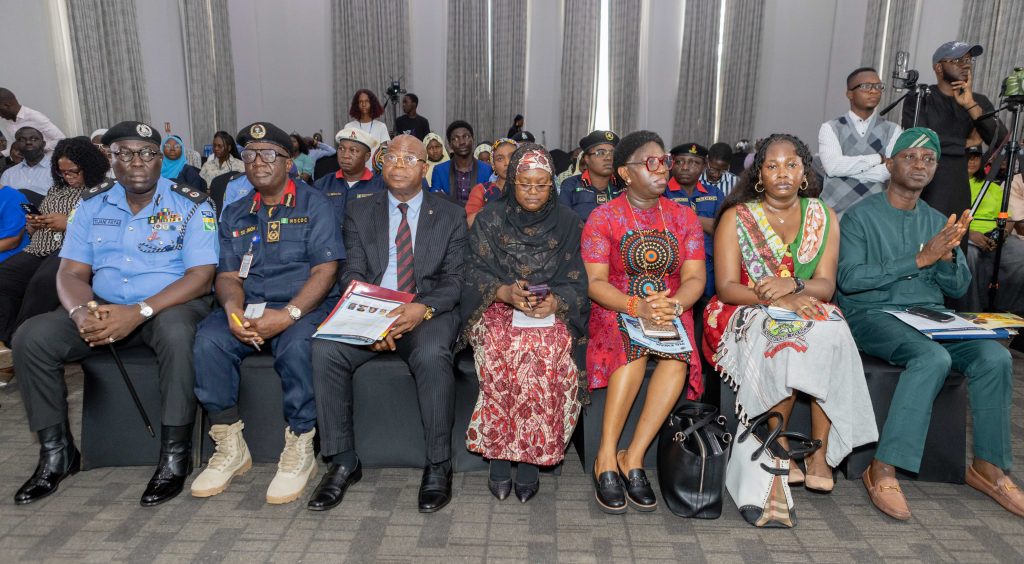
This challenge formed the focus of the 7th Annual Summit of the Education Writers Association of Nigeria (EWAN), held in Lagos on Wednesday under the theme, “Schools Under Threat: From Reactive Responses to Sustainable Protection.” Contributions by Professor Oluwatoyin Temitayo Ogundipe, Inspector-General of Police Olatunji Rilwan Disu and EWAN Chairman Mojeed Alabi highlighted three interconnected dimensions of the problem: sustainable protection, preventive security and the responsibility of journalism to keep school safety in the public consciousness.
For Professor Ogundipe, Chairman of the Governing Board of the National Universities Commission (NUC), protecting schools requires a departure from responses driven solely by emergencies. When authorities concentrate attention on an attack after it has happened, the immediate crisis may receive attention, but the vulnerabilities that made it possible may remain. Sustainable protection therefore demands effective policies, consistent implementation and cooperation among the institutions responsible for education and security.
The consequences of school insecurity extend beyond damaged facilities, interrupted lessons or the immediate victims of an attack. Fear can affect pupils’ willingness to attend school, parents’ confidence in educational institutions and teachers’ ability to perform their duties. Communities also bear the consequences when learning is disrupted. In a country where education is central to individual advancement and national development, insecurity threatens more than physical safety; it undermines the conditions necessary for education to fulfil its purpose.
The position advanced by Ogundipe points to the importance of treating school safety as a continuing responsibility rather than an occasional intervention. Protection must be considered in educational planning, school administration and security arrangements. It also requires stakeholders to examine whether existing measures address the specific vulnerabilities of individual schools and whether the commitments made by relevant authorities translate into practical safeguards.
The security dimension of this challenge was reinforced by Inspector-General of Police Olatunji Rilwan Disu, who emphasised the need to move from reactive responses to preventive action. His position places intelligence-led policing, early warning systems, community partnerships and preparedness at the centre of sustainable school protection. The objective is to identify threats and vulnerabilities early enough for appropriate action to be taken before they develop into attacks.
Such an approach requires more than the presence of security personnel after a threat has emerged. Schools, communities and security agencies need reliable channels for sharing information, clear procedures for reporting threats and coordinated arrangements for responding to emergencies. School administrators, teachers, parents and community members can contribute to prevention by reporting suspicious developments promptly, while security agencies must be prepared to assess information and act appropriately.
Disu also drew attention to the role of technology in strengthening protection. Surveillance systems, access controls and emergency communication platforms can support security arrangements, but their effectiveness depends on how they are implemented and maintained. Equipment without trained personnel, clear procedures and effective coordination may offer limited protection. Sustainable security therefore involves the combination of appropriate technology, preparedness, accountability and cooperation.
Yet, even the best security arrangements require public scrutiny to ensure that they work as intended. This is where journalism becomes an important part of the school-safety framework. Mojeed Alabi, Chairman of EWAN, the association that organised the summit, argued that education journalism must go beyond reporting attacks and their immediate aftermath. Journalists must also investigate preparedness, examine whether warnings were acted upon and track the implementation of promises made by authorities.
Alabi’s central message was captured in his declaration: “Children are not safe until every school is safe.” The statement places the safety of children at the heart of the discussion. It also challenges the tendency to treat an incident as an isolated tragedy rather than part of a wider problem requiring sustained attention. Every child should be able to attend school without fear, every parent should have confidence in the safety of the school environment, and every teacher should be able to teach without the threat of violence or abduction.
The history of attacks and abductions, including the Chibok and Dapchi incidents, demonstrates why school insecurity cannot be addressed through public concern alone. Journalism has a responsibility to preserve the memory of these incidents while examining the lessons they offer. This means asking whether preventive measures have improved, whether emergency procedures are effective, whether affected children receive appropriate support and whether communities can safely return to normal educational activities.
However, the responsibility to report school insecurity comes with important ethical obligations. Reports involving children, survivors and threatened communities require accuracy, sensitivity and respect for privacy. Journalists must distinguish allegations from verified facts, avoid sensationalism and refrain from publishing operational details that could compromise security. The urgency of informing the public must be balanced against the need to protect vulnerable people and avoid unnecessary panic.
The relationship between journalism and security institutions is therefore significant. The media must be able to scrutinise official actions independently, question inadequate responses and report failures without becoming a public-relations arm of government or security agencies. At the same time, responsible engagement between journalists and security institutions can improve public understanding, counter misinformation and ensure that communities receive credible information during security incidents. Independence and cooperation are not mutually exclusive; both are necessary for public accountability and informed reporting.
Ultimately, sustainable school protection depends on the responsibilities being carried out across the entire system. Government must provide effective policies and resources; security agencies must strengthen intelligence, preparedness and coordination; school administrators must develop and maintain appropriate safety procedures; and communities must have effective ways to communicate threats. Journalists, meanwhile, must continue to investigate, explain and monitor the issue long after public attention has shifted elsewhere. The success of these efforts should be judged by whether children can learn safely, teachers can teach confidently and parents can trust the institutions entrusted with their children.
The message emerging from the EWAN summit is that school safety cannot be secured through isolated actions or temporary responses. It requires a sustained commitment to prevention, institutional accountability and collaboration. As Alabi reminded stakeholders, “every child deserves the opportunity to learn without fear.” Turning that principle into reality will require Nigeria to measure progress not by announcements alone, but by the safety experienced by pupils, students, teachers and communities every day.
