
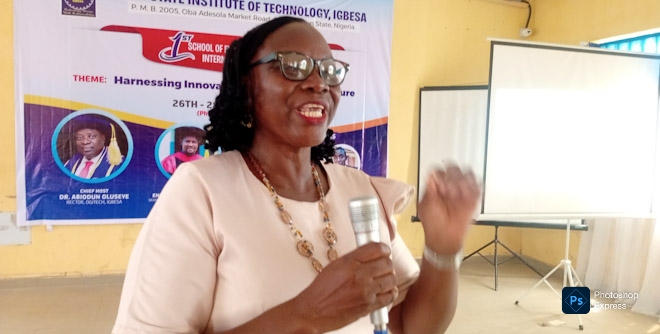
By Ayo Ajayi
In a keynote address that set the tone for the maiden International Conference of the School of Engineering Technology at Ogun State Institute of Technology (OGITECH), Igbesa, on Wednesday, Engr. (Dr.) Edith Alagbe called for meaningful collaboration among academia, industry, and government, describing it as the key to unlocking sustainable innovation and national development.
Speaking on the theme “Harnessing Engineering Innovations for a Sustainable Future,” Dr. Alagbe emphasized the power of interdisciplinary partnerships in realizing the full potential of engineering education. She urged institutions to move beyond traditional teaching models and embrace a future where research, innovation, and industry needs intersect.
“Sustainability means the responsible use of resources with tomorrow in mind,” she said, highlighting the long-term impact of engineering decisions.
Dr. Alagbe outlined strategic pathways for the future of engineering education in Nigeria. She advocated for mindset and curriculum reforms, greater support for self-directed learning, active mentorship, and the engagement of professional engineering bodies in promoting ethical research practices.
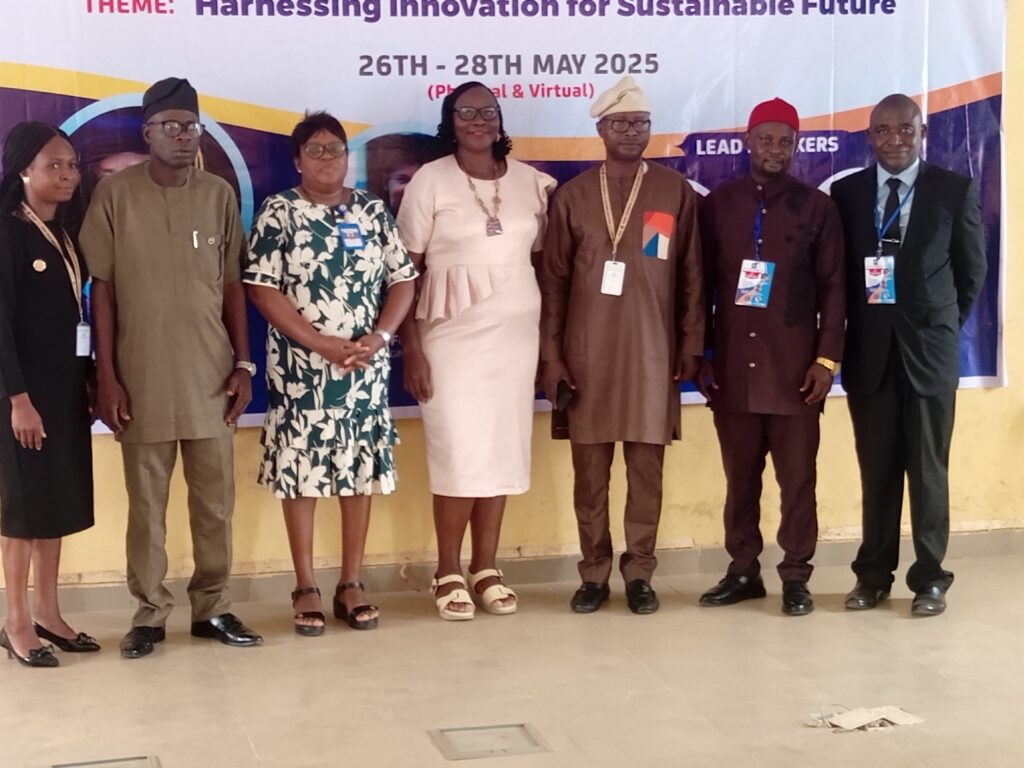
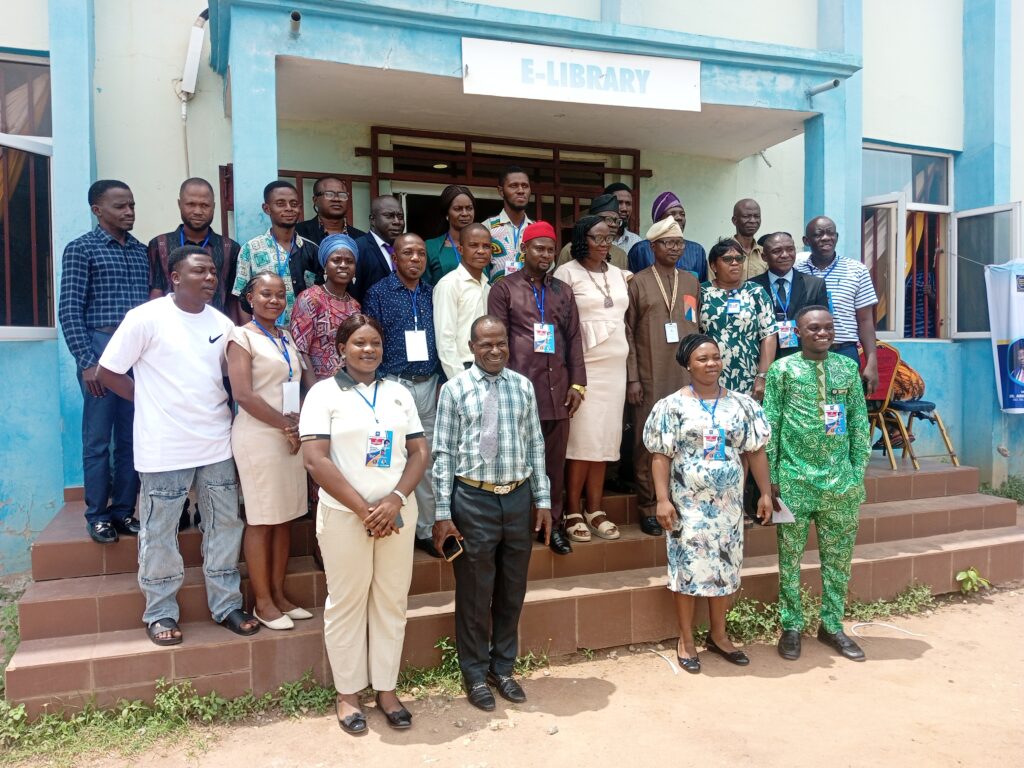
“As engineers, we have the responsibility to sustain the world,” she asserted. “We are the seat of knowledge where the industry comes to find solutions to the numerous challenges facing society.”
She also called for practical reforms, including investment in well-equipped laboratories and innovation hubs, stronger industry presence on campuses, and a merit-based approach to student admissions.
Throughout her address, Dr. Alagbe candidly tackled persistent structural issues within Nigerian engineering education. Citing data, she noted that over 70% of development barriers stem from systemic shortcomings such as weak industry-academia linkages, insufficient hands-on training, and outdated pedagogical methods.
“In collaboration, you must balance the ethics,” she advised. “As you create solutions and new challenges arise, you must be responsible enough to solve those challenges as well.”
Despite these concerns, her message remained hopeful.
“These are solvable problems,” she affirmed. “But only if we work together — not in isolation, but as collaborators.”
Dr. Alagbe underscored the critical role of engineers in advancing sustainable development, citing examples across disciplines: civil engineers designing green buildings, process engineers converting waste to energy, and mechanical engineers leading innovations in clean transportation. Each example demonstrates how engineering, guided by real-world needs and cross-sector cooperation, can drive meaningful change.
Also addressing the audience, the Rector of OGITECH, Dr. Abiodun Oluseye, emphasized that a sustainable future rests on quality, originality, and robust collaboration.
Represented by his deputy, Dr. Oluyemi Odutola, the Rector stressed the purpose of the conference as a platform to harness inherent strengths in addressing local challenges.
"We must not satisfy ourselves today and create challenges for future generations," he warned.
Earlier, in his welcome remarks, the Chair of the Planning Committee, Engr. Ayodeji Noiki, called for a united effort to explore how engineering — across all its branches — can serve as a catalyst for a more sustainable, equitable, and resilient world.
