
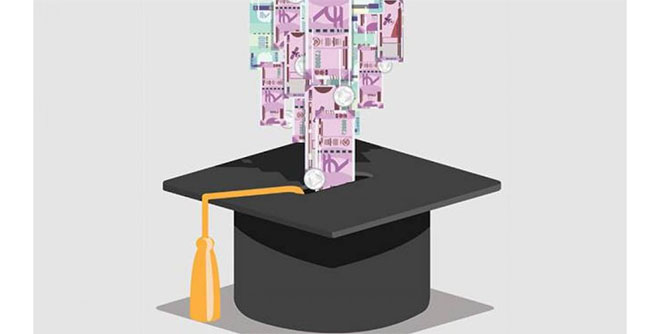
Students and parents are worried over the recent hikes in tuition by some higher institutions amid the delay in the implementation of a loan scheme expected to start this month.
The student loan scheme was initiated by President Tinubu’s administration to provide interest-free education loans for Nigerians willing to acquire tertiary education.
BusinessDay gathered that most of the processes required for implementation as stipulated by the law are not yet in place.
With its enactment earlier in June, the Access to Higher Education Act, 2023, otherwise known as the Students Loan Act, established an Education Loan Fund to help Nigerians fund their higher education, while they pay in instalments two years after completing their participation in the National Youth Service Corps (NYSC) programme.
But BusinessDay findings show the implementing ministries and agencies are yet to put together modalities to ensure the smooth take-off of the scheme as set by the law.
Ben Bem Goong, director of press at the Federal Ministry of Education, said the ministry, which is the lead implementing institution, had yet to receive the revised and gazetted copy of the Act to determine the process of implementation.
“There are still some areas the government wants to finetune in the law. I think when school resumes, the picture will become clearer,” Goong told BusinessDay.
Goong did not also give any assurance that students will begin to benefit from the loan scheme soonest but assured that the ministry will take the needed action when it receives the law establishing the student loan.
BusinessDay also gathered that issues of funding, modalities and guidelines for disbursement of the loans to students were yet to be set and defined by the government. The proposed education bank that will facilitate disbursement as contained in the Act has not been established.
After signing the bill into law, President Tinubu in June approved the constitution of a committee to finetune processes to ensure successful implementation within six weeks ahead of the proposed September take-off. But, the deadline given to the committee has elapsed but no modalities have been set.
“I can’t wait for the loan scheme to start because school fees have increased, so it is not really easy for my parents now,” Ruth Emenike, a student of English Education, University of Abuja, said.
Christian Chikeziri, a 200-level student of Michael Okpara University of Agriculture, said tuition has been raised from N56,000 to N90,000 for his course. “The situation has posed a lot of difficulties for students and some are even dropping out because they can’t cope.”
Education experts say there are still lingering concerns that could affect the effective implementation of the scheme.
Princewill Anyalaewchi, a retired deputy director, of education at the Federal Ministry of Education, expressed concern over the selection process.
He said the government must first ensure that there is no segregation, the process is not politicised, and modalities must be put in place such that only true beneficiaries can access this loan, and not those whose parents are rich.
He added that the Act does not give much clarity on how the government would identify indigent students.
“Also the criteria should not be too rigorous; it should not operate like the Federal Scholarship Board. The standard was too high,” he said.
He also recommended that the proposed 10 per cent repayment can be reduced to a single digit, say 5 per cent, to make things easier.
Business Day
